

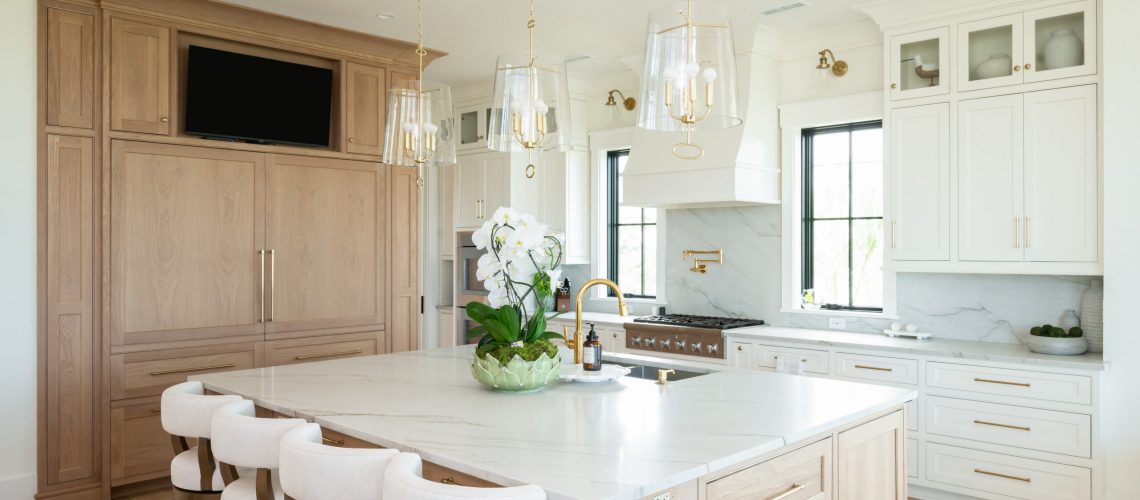
The best countertops for coastal homes in Charleston are materials that stand up to year-round humidity, salt air, and strong sun: quartz, granite, and porcelain. Quartz is nonporous and needs no sealing, granite handles heat and direct sunlight very well, and porcelain is resilient against water and UV exposure, which makes it a strong pick for outdoor kitchens. Palmetto Surfacing has fabricated countertops for Lowcountry homes since 1984, and every slab we sell is cut and finished in our own 35,000-square-foot facility in North Charleston.
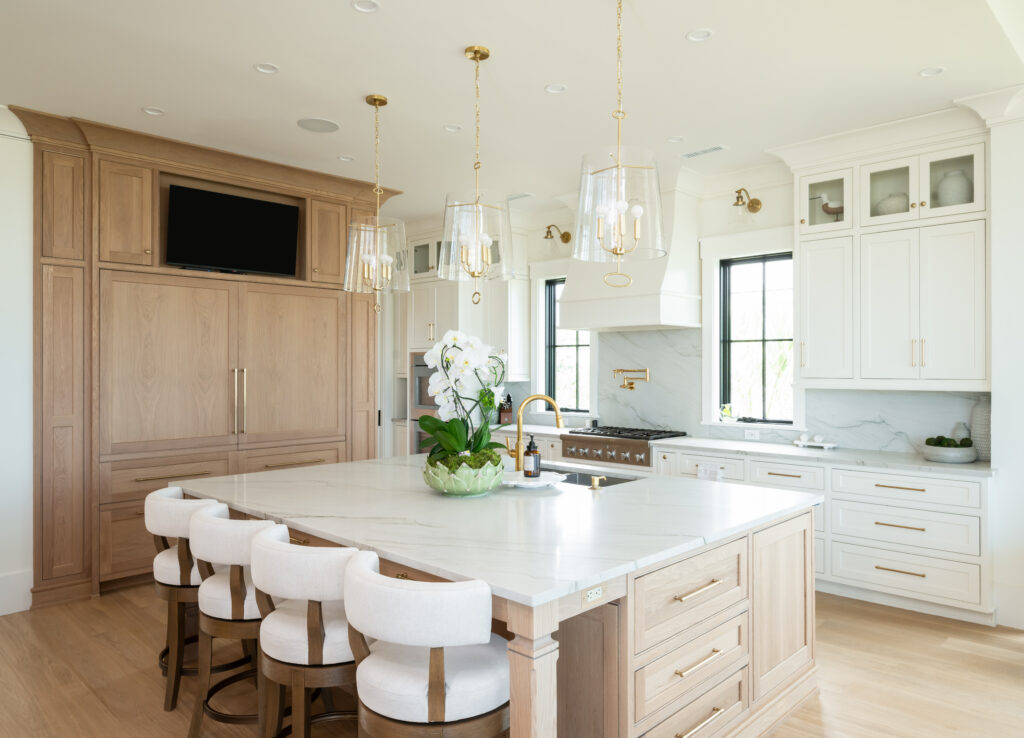
Climate is not the only thing that matters when you choose a countertop, but near the water it is the one people underestimate. Below, we cover how Charleston’s weather affects countertops, our three top picks for coastal homes and why, what to know about marble and quartzite, and the simple habits that keep any countertop looking its best.
How Charleston’s climate affects your countertops
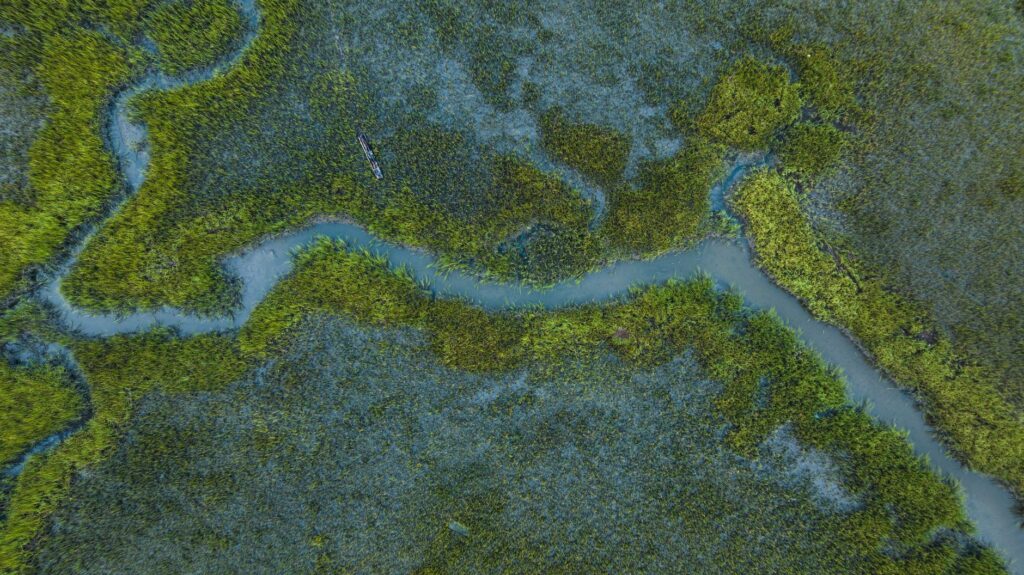
Living on the coast puts a few specific demands on a countertop. Charleston has high humidity year-round and warm temperatures that shift with the seasons. Moisture in the air is constant here, not occasional, so any porous surface is always being asked to resist it. Heat and sun add to that, especially in rooms with big windows and on covered porches.
Then there is salt exposure. In homes near the water, salt and moisture settle on countertops inside and out, especially on outdoor kitchens and the counters closest to the door. That is why we tell coastal homeowners to wipe salt and moisture away quickly instead of letting them sit.
Finally, the Lowcountry has storm potential, with occasional flood risk. A countertop does not have to be indestructible, but it is a good reason to favor materials that handle water well and clean up easily, and to keep up with maintenance. Before storm season is a good time to check that natural stone is sealed and that outdoor counters are clear and wiped down.
Quartz: nonporous and low maintenance
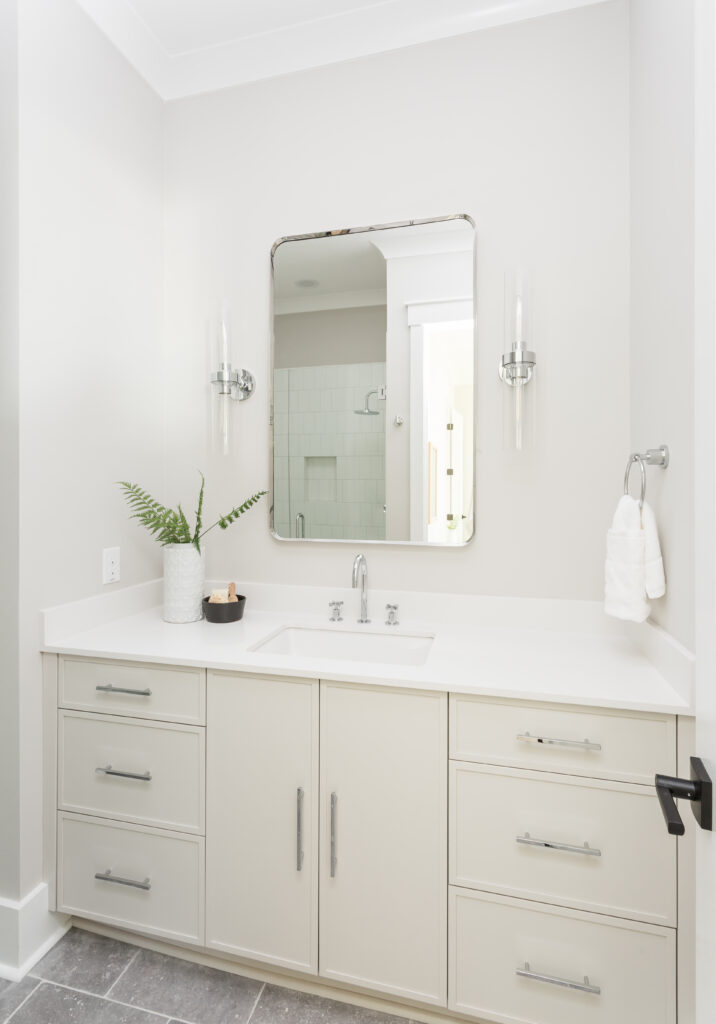
Quartz is our go-to recommendation for coastal homeowners who want a countertop they can mostly stop thinking about. It is an engineered stone, and it is nonporous, so humidity has nowhere to go. That same nonporous surface resists bacteria and mold, which matters in a climate where moisture is always in the air.
Quartz also needs no sealing, which keeps maintenance easy: soap, water, and a soft cloth handle everyday cleaning. It is a strong fit for kitchens and bathroom vanities, anywhere moisture is constant. We fabricate engineered quartz, including Cambria, in our North Charleston facility. The one caveat is direct heat, so use a trivet for hot pans, and for outdoor kitchens we point people toward granite or porcelain instead.
Granite: handles heat and direct sunlight
Granite is a natural stone, and it handles heat and direct sunlight very well. That makes it a great choice for outdoor kitchens and for indoor kitchens with lots of windows, where countertops sit in strong Lowcountry sun every afternoon.
Because granite is a natural stone, it does need sealing. In Charleston’s humidity, we recommend sealing natural stone once a year to protect it. Keep up with that and granite holds up well to coastal living. Every slab is one of a kind, so visit our showroom to see full slabs and reserve the exact piece you want. Ask your sales consultant about sealing when you choose your slab.
Porcelain: built for water, UV, and outdoor kitchens
Porcelain is durable, with a clean, modern appearance. It is resilient against water and UV exposure, and that combination is why it is such a good fit for outdoor kitchens on Lowcountry porches and patios, where countertops face rain, humidity, and full sun.
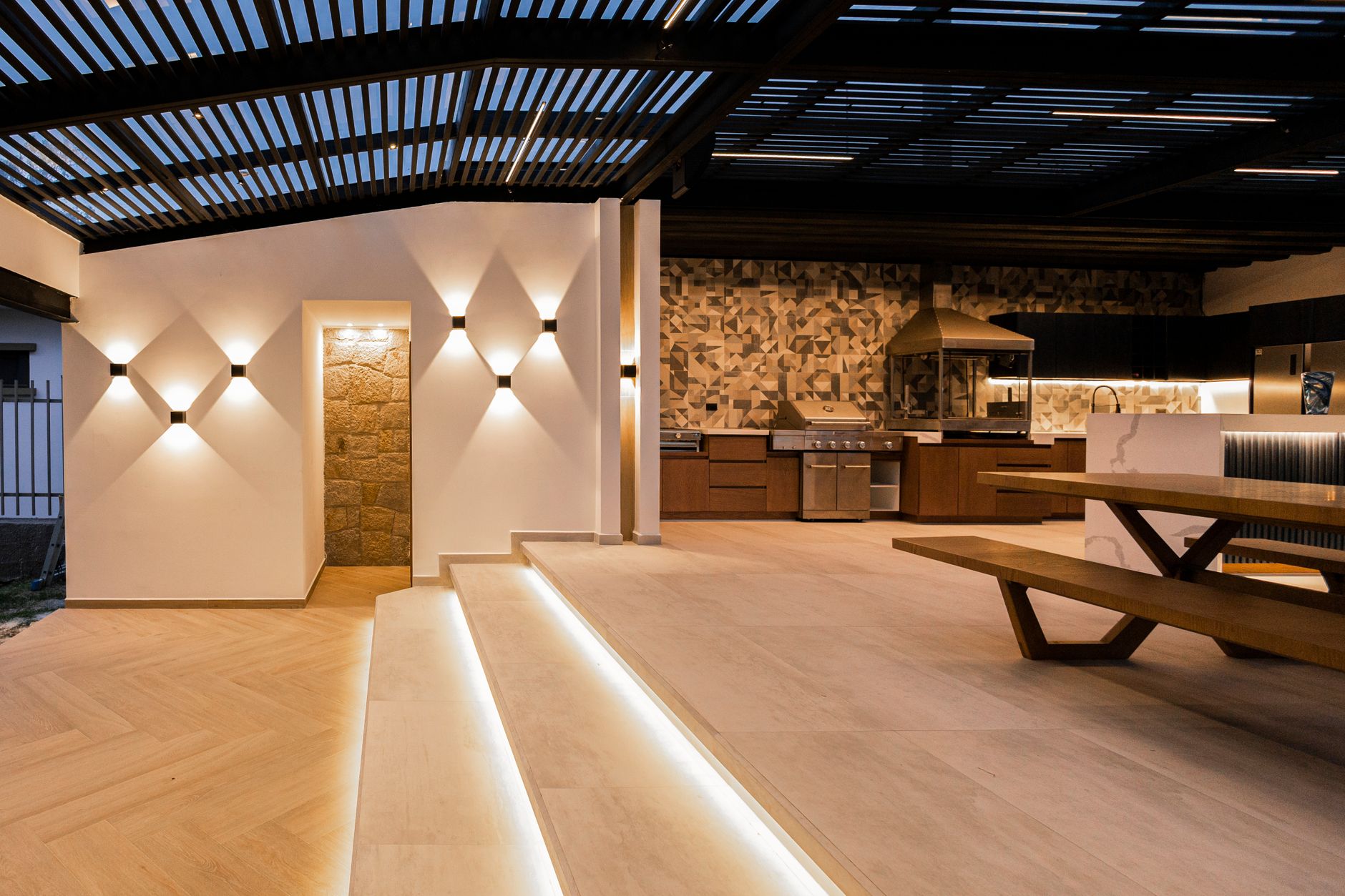
Like quartz, porcelain is nonporous, so it stays easy to clean. It is also highly heat resistant, so setting a hot pan on it is not a problem. If you want one material that works in an indoor kitchen and an outdoor one with very little fuss, porcelain deserves a serious look. Ask about it at your showroom appointment, and your sales consultant can show you how it compares to granite for your kitchen, porch, or patio.
What about marble and quartzite near the coast?
You can absolutely have marble or quartzite in a coastal home. Both are natural stones with beautiful veining, and both need the same annual sealing we recommend for granite in Charleston’s humidity.
Marble is the softer of the two. It scratches more easily and etches when acidic liquids like lemon, wine, or vinegar sit on it. Quartzite gives you a marble-like look with less worry. If you love either one, we will help you plan a care routine that fits how you use your kitchen. Our guide to choosing a countertop material goes deeper on each.
Use pH-neutral cleaners on every surface
Whatever material you choose, use pH-neutral cleaners. Plain soap and water works for everyday cleaning on every surface we sell. Skip harsh or acidic sprays, which can wear on the finish over time, and use a soft cloth rather than an abrasive pad.
How to protect countertops in a coastal home
Three habits cover almost everything humidity and salt air can throw at a countertop. First, seal natural stone, including granite, marble, and quartzite, once a year to protect it against humidity. Quartz and porcelain are nonporous and do not need sealing. Second, stick with pH-neutral cleaners. Third, wipe away salt and moisture quickly after exposure, whether that is a wet beach bag set on the island, rain blowing into an outdoor kitchen, or water tracked in after a storm. A quick wipe with a soft cloth is all it takes. When we template a job in a coastal home, this is the conversation we have on site.
Common questions about countertops near the coast
What is the best countertop material for a coastal home in Charleston?
Quartz, granite, and porcelain are our top picks. Quartz is nonporous and needs no sealing, granite handles heat and direct sun, and porcelain resists water and UV, which makes it great outdoors.
Does humidity damage granite countertops?
Granite is a natural stone, so it needs sealing to protect it against humidity. In Charleston, we recommend sealing natural stone once a year. Quartz and porcelain are nonporous and do not need sealing.
Which countertops are best for an outdoor kitchen?
Granite and porcelain. Granite handles heat and direct sunlight very well, and porcelain is resilient against water and UV exposure. Both are worth seeing side by side at our North Charleston showroom.
Does quartz need to be sealed?
No. Quartz is nonporous, so it resists humidity, bacteria, and mold without sealing.
How should I clean countertops in a beach house?
Use pH-neutral cleaners or plain soap and water, and wipe away salt and moisture quickly after exposure. Seal natural stone countertops once a year. A soft cloth is all you need for daily cleaning.
See coastal-ready materials in person
The best way to choose is to see full slabs side by side. Visit our showroom at 7645 Southrail Rd, North Charleston, SC 29420, Monday through Friday, 8 AM to 4:30 PM, and our team will walk you through quartz, granite, porcelain, and natural stone for your home. Call 843-569-1131 or request a free estimate. Want to start online? Browse our quartz countertops page before you come in.